 |
The Spread of Steroids in Baseball
When the Mitchell Report, on steroid use in Major League Baseball [MLB], was published people were surprised at both the number and names of those who were mentioned. The diagram below shows a network map created from data found in the Mitchell Report. Baseball players are shown as green nodes. Those who were found to be providers of steroids and other illegal performance enhancing substances appear as red nodes. The links reveal the flow of chemicals -- from providers to players.
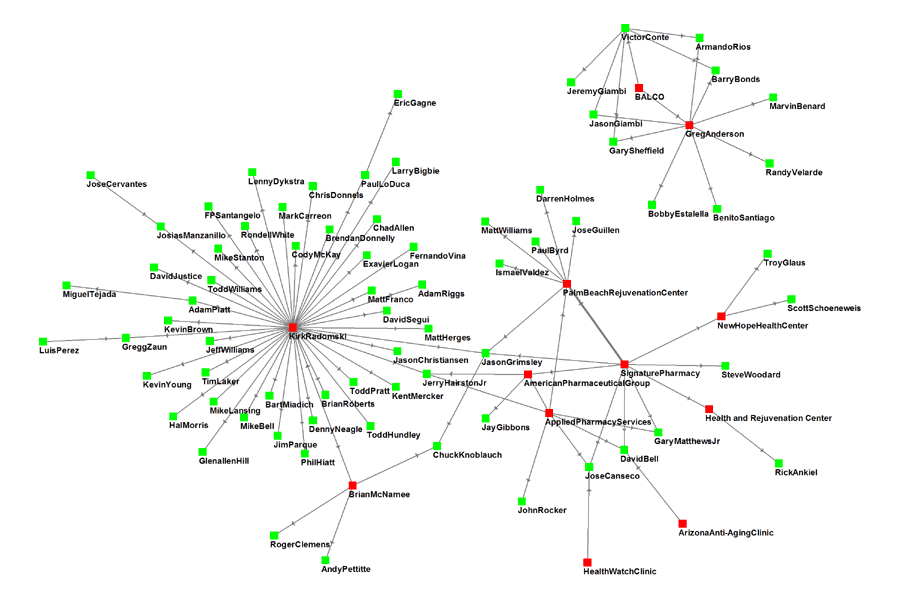
Figure 1 - Steroid Supply Chain Network
By looking at the map above, it appears that the players taking steroids are not connected to each other. The hubs [red nodes] in the network above are the drug providers -- they appear to be the connectors who are controlling the process. Yet, one picture is never sufficient when examining complex human systems. We need to see other pictures/maps to get a better grasp of what is really happening. We take several views/pictures of social systems for the same reason that a doctor takes several views/x-rays of your injured arm -- multiple views provide multiple insights.
Through player trades and free-agent signings, MLB does a good job of building multiple overlapping social networks. With players constantly changing teams, they form new links with new teammates, while maintaining many of their old ties to former teammates. This activity quickly creates a densely interconnected social network like Figure 2 below.
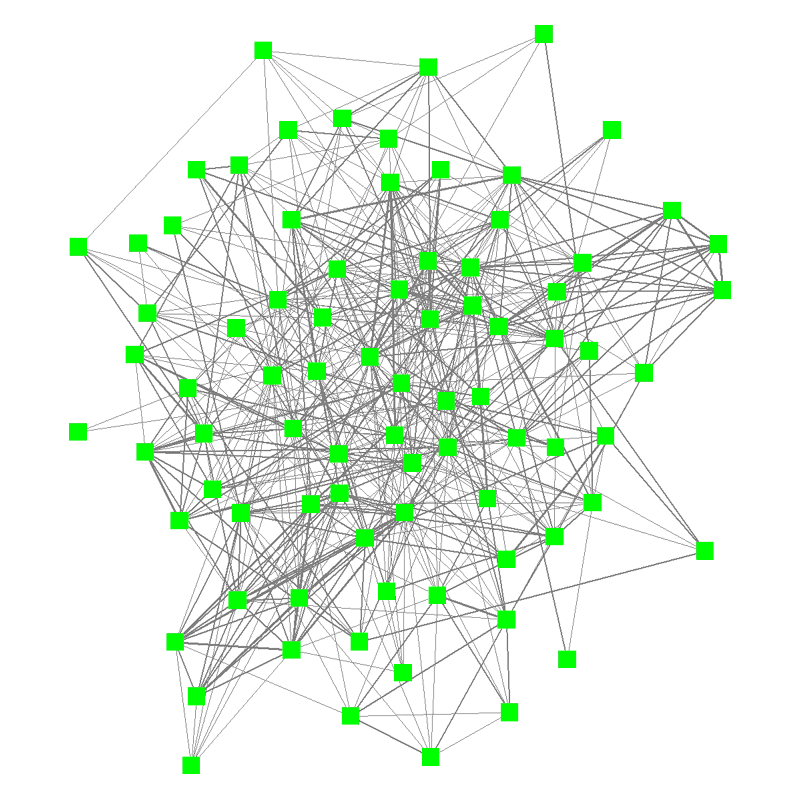
Figure 2 - There are No Silos in Baseball
Figure 2 shows the same baseball players [green nodes] as in Figure 1. We have removed the drug providers [red nodes] from Figure 2 to concentrate on the player-to-player ties. We have also changed what the links between the nodes show. Now, two players are connected if they were on the same team at the same time -- a thicker line connects players who spent more time together as teammates. Figure 2 reveals the dense connections in MLB that have formed via frequent player movement between teams. We see that the players, who appeared to be disconnected in the original view [Figure 1], are now revealed to be tightly intertwined with each other. The constant movement of players between teams make dense overlapping social networks almost inevitable.
What happens inside a dense social network? Information moves quickly over short paths and similar messages are heard again and again via redundant links. Everyone seems to know, and believe, the same things. When you combine "pay for performance" with a closed network where the message is: "everyone is doing it and it appears to be OK to do so" you get a lethal combination. The promise of enhanced performance, along with the fear of enhanced competition [others are doing it] may lower the threshold for adoption of steroids amongst most MLB players.
Figure 3 below shows three teams that had more than a handful of players named in the Mitchell Report. The magenta colored links show intra[within]team ties, while the gray links show inter[between]team ties. Naturally, the network is denser within a team than between teams. This "small-world" network pattern creates a very efficient network for moving information [who's doing it?] and knowledge [how do I take advantage of it?] throughout MLB.
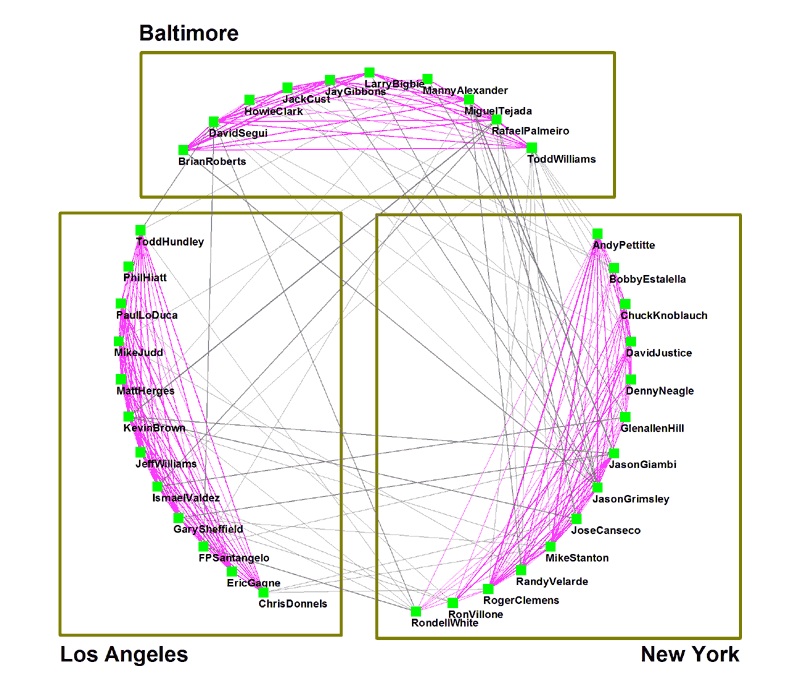
Figure 3 - Social Connectivity Within and Between Teams
From looking at all of our views of the social structure in baseball we see that MLB players live and play in very efficient social networks. Applying network metrics to the MLB data, we see that most MLB players are within 3 steps of each other, while many are within 2 steps -- forget about the six degrees/steps we were so amused about with Kevin Bacon! If steroids are happening within baseball, just about everyone knows it, even if they do not know all of the details.
If the MLB network structure allows everyone to know what is happening, the Mitchell investigators must have had an easy time interrogating players, right? Wrong -- a close network also implies conformity. To remain a member of the network you play by the rules of the network. As in many groups where members are aware of covert activity, one of the strongest informal rules is "don't talk." People in dense groups usually conform willingly -- they do not want to be pruned from the network. This was one of the factors that allowed steroid use to grow and persist through the recent years and why outsiders had a hard time figuring out what was really going on.
Home | Software | Training | Consulting | Case Studies | Blog | Contact
Thank you to Silvija Krebs for public records research
Copyright © 2008, Valdis Krebs